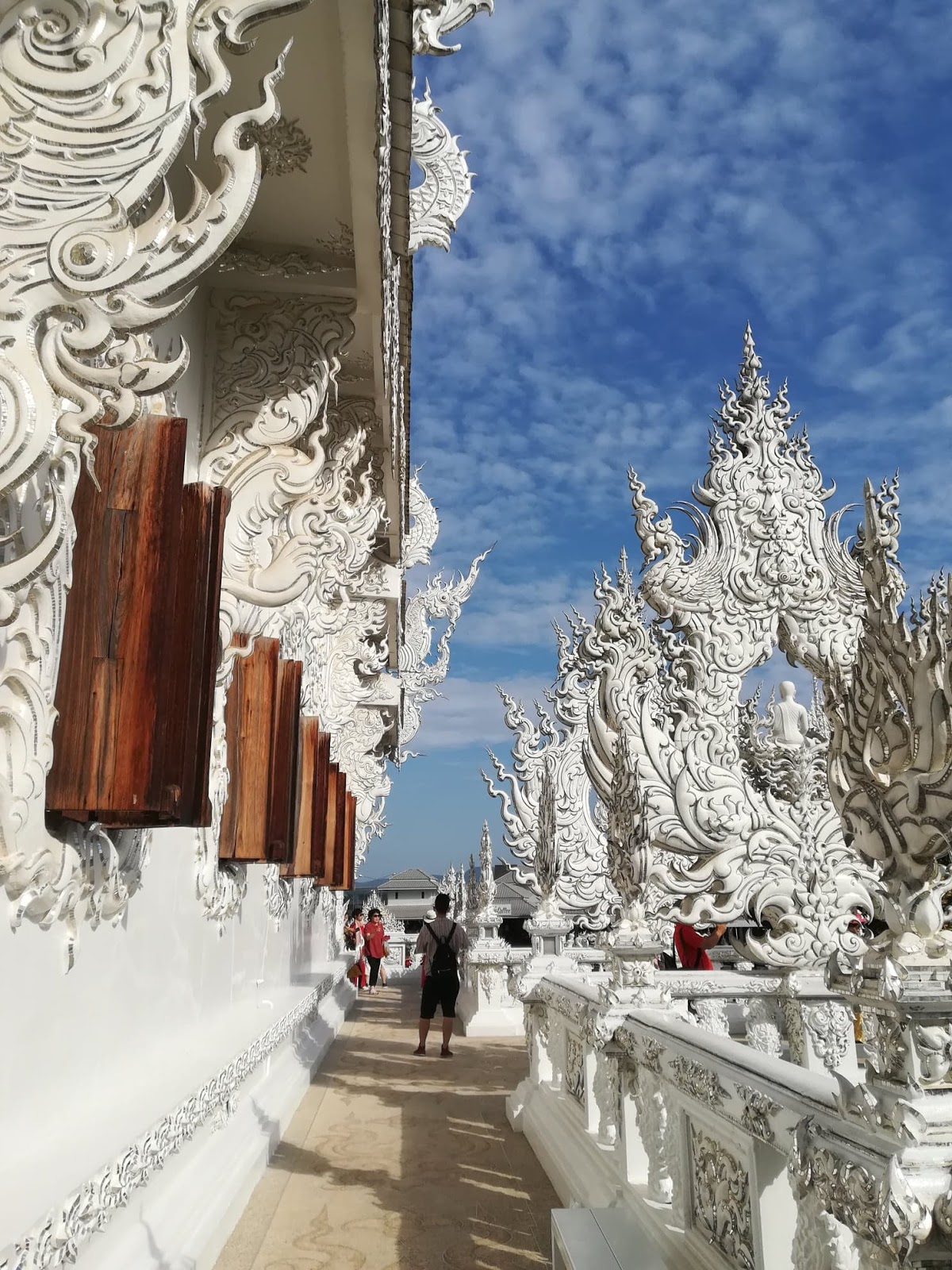
Latest news are about my long awaited holiday. It was basically the best part of the whole thing so far. I have collected all my days (and some extra with working on holidays/weekends) and took a nice 2-week-long trip around the central and northern part of the country.
This land is crazy big, just to say the very obvious. Five times as big as my home country it was a challenge to get from A to B (eventually traveling 23 hours, what) and there are a lot of points, for sure. Started in the capital, went to the north, countless temples, breathtaking views, good food, sightseeing, cycling, trekking, back down to the seaside, swimming, sunrise, sunset, infinite number of photos - really an amazing time.
Hi all again, here comes a short summary of what I have learnt so far. Short, as explaining would take ages or well, you know the other option… Try it yourself.
July was obviously THE month of learning. So I began at the basics: how to get up really early and learnt to go to bed again, really early - also, how to exist in degrees varying between 30-40. All. The. Time. Basically, I had to re-learn how to sleep.
Another basic step was food. People were surprised when I told them I like spicy - and then I was surprised what they actually mean by spicy. However, I adapted and now I can tell by the looks of the food if I (or anybody I know at home) could eat it. About ingredients: even the things I know are a bit different here. When they told me that the little green tomato-like balls are eggplants, I thought it must be a translation error. Or the famous morning glory, which I'm pretty sure was named by some foreigner with hangover. But Google is my friend and helped me to confirm that they were right. Turns out I knew even less about plants than I thought...
Cooking here is just like what you expect from master chèfs - throw everything you have at hand to a pan, add some soy and oyster sauce (and of course chili) and done. Put it on some rice and enjoy.
Oh and never forget that ANYTHING can be fried - even ice cream. Let's see some other aspects, though: I have learnt to trust Thai people - try going home from ~350 km, on a 13 hours trip only by relying on 2 stickers on your T-shirt and let me know the result. Extra conditions: do not speak a single word of the local language and expect no-one to speak English. Here it was like: putting us here, sending us there, and then voilà, we're at home. One useful tip though: know how to correctly pronounce the name of the city you're going to.
Same goes if you're on a walk and just get tired of walking - you can count on someone to ask you to sit on the back of their motorbike in 5 minutes. If you are in such a small village like me, then you don't even have to say where you're going, they would know just by looking at you. The only other blond European in the district is a man, who's been living here for 15 years so there was no space for confusion.
Language in 10 words: 5 intonations and no space between words in writing. If I know one thing, it's that “ka” is the most important word. Or at least the most used. It means please, okay, agreed, correct, good, thanks, no problem and so on and so on… Unfortunately the different tones do not make any sense to my Hungarian ears so even when I'm trying to repeat what they say I don't succeed. Or when I do, that's totally by accident and I never know how I got that one right. Long story short: it's really unlikely that I'll be working with my Thai language knowledge after getting home. Sorry, bosses.
And a quick glance into teaching: kindergarten is a playground. For teachers.
And now something I'm still learning: how to let go of everything that's not positive. Stress? Nope. Hurry? Nope. Plans? Nope. Problems? Nope. Timetables? Nope. Anything not happening as you agreed/thought? 5555.
I've been here already a month, I cannot believe it! So far it has been a journey of surprises, shocks and a bit of sun sickness. Let me introduce you to the highlights of the month regarding my daily work. Teaching is really a difficult job (shout out to all the people doing this for a living, you are SUPERHEROES) and add that barely anyone speaks English here, not the kids, nor the teachers. However, people here just love you, whatever you do, which eases even your (claimed) failures. In school, the first shock came when students stood up in middle of class and went out to play or started running around in the classroom without any question. On the first day I tried to imagine what I would have received for this at their age at home... On the second day I tried not to reach the point where they get bored - day 27 and still trying. Not sure who developed more so far, them or me.
After all I'm also learning: the nature and interests of different age groups of kids, my own limits, coping, patience, improvising and how to be useful while having fun. I have to admit, it's not easy but well, no one ever said it would be.
And the strangest thing so far? To get used to being called Teacher, like all the time, just <Teacher> for kids, parents and even for people on the street. From dawn to dusk you can hear <Teacher> from every single angle around you, sometimes even in your dreams.
We have arrive to the next stage of RED ONION project: 8 countries come together for a week, to have a training about volunteering, mentoring, coordinator, intercultural learning, and to discuss the next steps ahead.
We learnt a lot of things about problem solving and project management, so there will be a lot of upcoming things around red onion - it is worth to stay tuned ;)
The participating countries (Indonesia, India, Vietnam, Thailand, Czech Republic, Poland, Portugal and Hungary) are going to send their volunteer to each other organization for doing volunteering during the next 6 months.
Our Te Is volunteer is Niki Solymosi who travelled to Hatyai, Thailaind for 6 month EVS project, she is going to rule our blog nowadays :)
For appetizer here is a lovely video about the training course made by the hosting organization of the project Dejavato
We are happy to announce that Te Is is a part of an other beautiful project from 2018: Red Onion.
RED Onion (Recognition of non formal education, Empowerment of Young people and
Development of Youth Work - Onion) is a 24 months project coordinated by YUPI
organization in Portugal, in close partnership with Hungary, Czech Republic, Poland,
Vietnam, Thailand, India and Indonesia.
"Onion" represents many times a symbol for the Diversity issues, a concept that we
understand as transversal to our project and that we want to integrate in our working
culture and raise awareness for the added-value of diversity for young people.
During this 24 months we are going to keep you updated what we are doing, since there is many things going to happen - jobshadowing, training, networking, volunteering, capacity building and many lovely things.
It has started with a kick-off meeting in Portugal, where all the partner organization came together to set up goals and start this intercultural adventure. From Portugal youth workers from Indonesia, India, Thailand and Vietnam travelled to Hungary, to start their jobshadowing.
Te Is Foundation has hosted a 4-day study visit from 2nd of February till 6th of February in Budapest.
During these days we have visited Kompánia AlterYouth Center in the outskirt of Hungary, we have inspired by Crunch Budapestand with the wide variety about their work, how to advertise sustaintable education by innovation, art, networking, and in business. We have visited the European Youth Centre in Budapest, where we learnt about the Council of Europe, the Youth Departnert, how they work, and we have received many useful tools. Last bust not least we have visited toNew Generation - Budapest Youth Center and H13 the Student and Entrepreneurship Center in Budapest. These days was interesting and we learnt but the four youth worker, Manoranjan Mishra
Kharisma Rosandrini, Parin Charoenchanaporn, andVu Duy Kien has already contiuned their jobshadowing journey to Czeck Republic to our lovely partner organisation Genesis.
These days was really inspiring for Us and I am very interested how Red Onion contiunes. Interested? Stay tuned!
The Media Diet Youth Exchange has ended in 10th of August, 2017. We learnt a lot about being offline, how the online media affects our daily lives, made some international friendships, and we have already received our Youthpass certification about the program, as well.
However the projekt has ended in August, we still carrying the nice memories with us...
"This opportunity gave me a pricelessexperience, which encouraged me to strongly recommend this kind of
projects to others. This was
my first exchange, and although I was a bit afraid of this new situation, I
have to say, it worth wonders to live my comfort zone. We spent seven days
together in a small village without our smart phones and other technical
gadgets. It was far more enjoyable than I could have expected. I am convinced
that all of us returned home more richly than we were when we had arrived. Not
to mention, it was wonderful to get to know these fantastic people and enjoy
the benefits of individuality while practicing empathy. So, this offline
international youth exchange showed me how colourful this world is, and how
much easier it is to realize it without being glued to our phones.”
(Farkas
Fanni, Hungary)
“ I
have met so many new people and new cultures. It was short but intense and
full of emotions. I've found that I can have fun even without being connected
to everyday life, far from my friends and family. The absence of the phone
allowed us to fully enjoy the experience. Now I've learned to use the phone
more properly, which often leads to a waste of time. Basko will stay forever in
my heart.”
(Alessia Marrocu, Italy)
„I have learned that it is very important to stay in contact with
people if you talk each other in real life becouse it is easier to understand
each other, rather than if everybody just write via whatsapp or facebook they would have problems to communicate face to face. That is a reason why lots of men are shy
to talk with girls because they didn‘t know what to say. It‘s almost enough just to
say hey, I am .... and so on. The only thing what changed since the exchange is
that I try to meet my friends in real life and talk each other.”
(Valentin Reddich, Germany)
Media Diet in the Newspaper of Beelen.
You can find the full article here
„In hungary I felt very comfortable, I could not speak
English, but you could communicate with signs, which was exciting and at the
same time lust. some think Google translator is faster, yes it is but it is
much more funny to laugh about the "misunderstandings"
The internet is not everything, you miss the beauty around
you. when you switch off the internet you see everything with another eye. You
admire the nature, the colors of the earth and you have much more time for your
family, friends. Why write with those when you can meet?
I found the idea to put the phone away very good, because I
had a lot more time with the people to entertain me. The human beings could not
save themselves the memories in the mobile phone, we have stored them in our
hearts.
I learned a lot. even more than I thought I'm more open now
.. I talk to the people personally and meet me with more, instead of spending
hours with writing.”
(Rojhat Tanzli, Germany)
„It's really impossible not to use smartphones for the daily
life - Life is easier with them. :) Especially if
u can use them right.”
(Elizaveta Popova, Czech Republic)
„The exchange taught me that even though we were all quite
different, had different background, hobbies and lives at home, we could have a
great time together. The exchange also gave me more self confidence, now I
could more easily go on a similar trip or do something that I might find
barrier-breaking.”
(Liva Steuk Hansen, Denmark)
„I was worried that participants would be anxious
without their connection to the outside world, but that didn't happen, I really
enjoyed it though, and we saw how being offline was good. I learned to communicate better with a group of people who were right in front of me.
Now I spend less time online because there is more
productive and real things to do with the real people around me."
(Jordan Cassells, Ireland)
(thank you for the video: Grépály Kata)
Would you like to participate youth exchanges, or other international project?
Keep following us in Facebook, to get informed our project amongst the first ones!